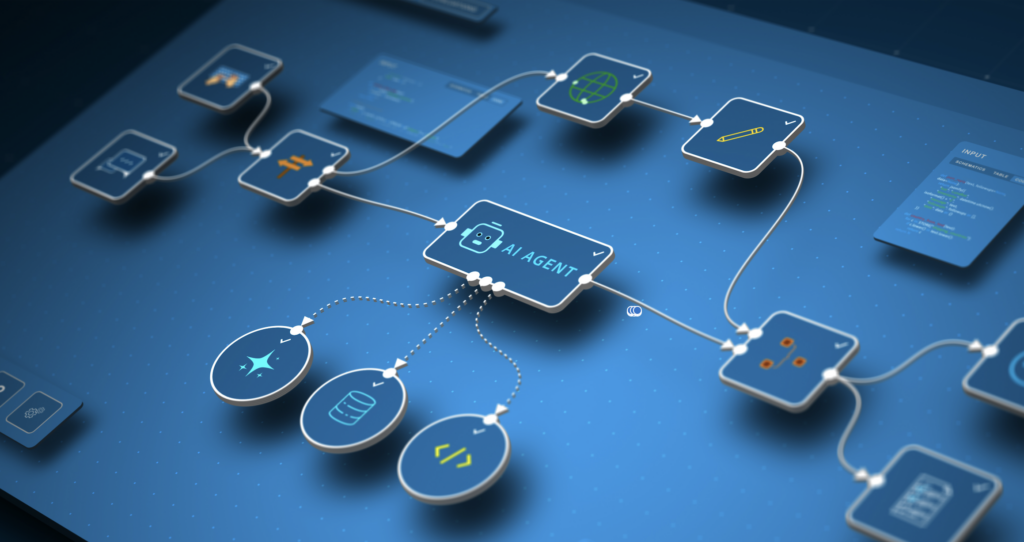
Generative AI has evolved from speculative board presentations into a core operational capability. However, moving beyond toy demos to production-grade enterprise deployment requires rigorous data governance, scalable infrastructure, and disciplined cost control.
The Enterprise Generative AI Maturity Curve
Most enterprises begin with commercial SaaS wrappers before realizing that sensitive internal data requires private, isolated intelligence. A production architecture combines retrieval-augmented generation (RAG) with vectorized enterprise data repositories.
Key Architectural Components:
- Embedding Generation & Vector Indexing: Chunking unstructured documentation and indexing embeddings in vector databases like Pinecone, pgvector, or Milvus.
- Contextual Re-Ranking: Utilizing cross-encoders to ensure retrieved chunks have maximal relevance before prompt synthesis.
- Guardrails & PII Redaction: Filtering sensitive tokens and enforcing strict safety boundary rules prior to model inference.
Measuring Return on Investment
Successful enterprise AI initiatives track quantifiable velocity metrics: reduction in first-response resolution times, code output acceleration across engineering squads, and deflection of repetitive tier-1 support tickets.